How to brainstorm a story with a mind map
A blank page asks for sentences. A mind map only asks for ideas, and ideas come faster when they don’t have to be in order yet. Here’s how to go from nothing to the shape of a story.
1. Start with one question
Put a single question in the middle. Not a title, a question: “What if a lighthouse keeper refused to light the lamp?” Questions pull ideas out; titles just sit there.
2. Branch without judging
Around it, write everything the question makes you think of: people, places, images, scenes, lines of dialogue. Don’t stop to decide whether they’re good. Aim for quantity; twenty ideas in ten minutes is a good start.
3. Ask the five questions
If you get stuck, go round the map asking: who is involved, what do they want, where does it happen, when, and why now? Each answer is a new branch.
4. Link and cluster
Now look for connections. Draw a line between ideas that belong together: a character and the secret they keep, a place and the storm that hits it. Clusters will appear, and each cluster is often a storyline, a character arc or a chapter.
5. Prune
Some ideas won’t fit this story. Don’t delete them: move them to the edge, or to another map. Today’s orphan idea is often next year’s book.
6. Turn the map into an outline
Pick the strongest cluster and ask what happens first, what changes, and how it ends. Write those as your turning points, and you have the start of an outline.
Cloud maps in Storywriting
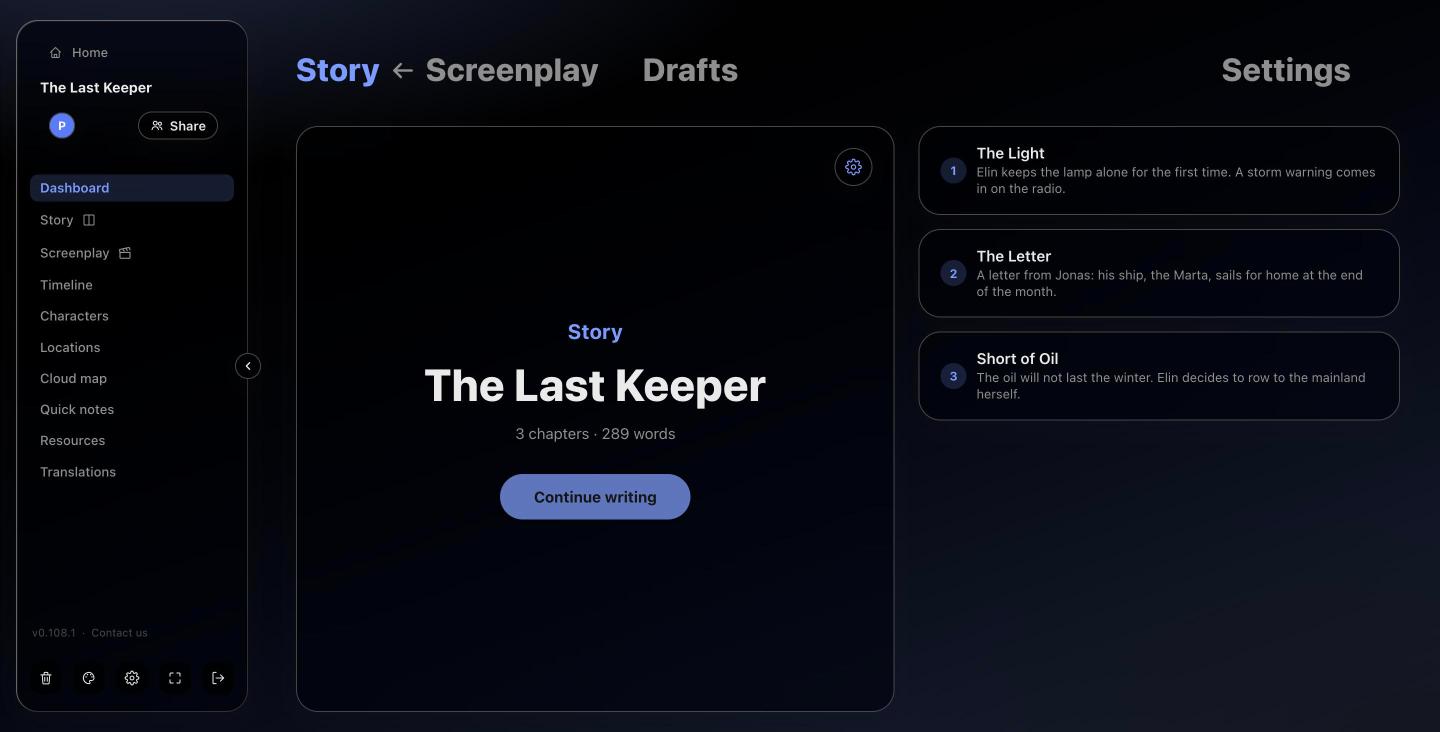
Every project has Cloud maps: a free canvas where you drop ideas anywhere, edit them in place and link them together. Make as many maps as you need (one for the plot, one for the world, one for a character) and come back to them while you write.
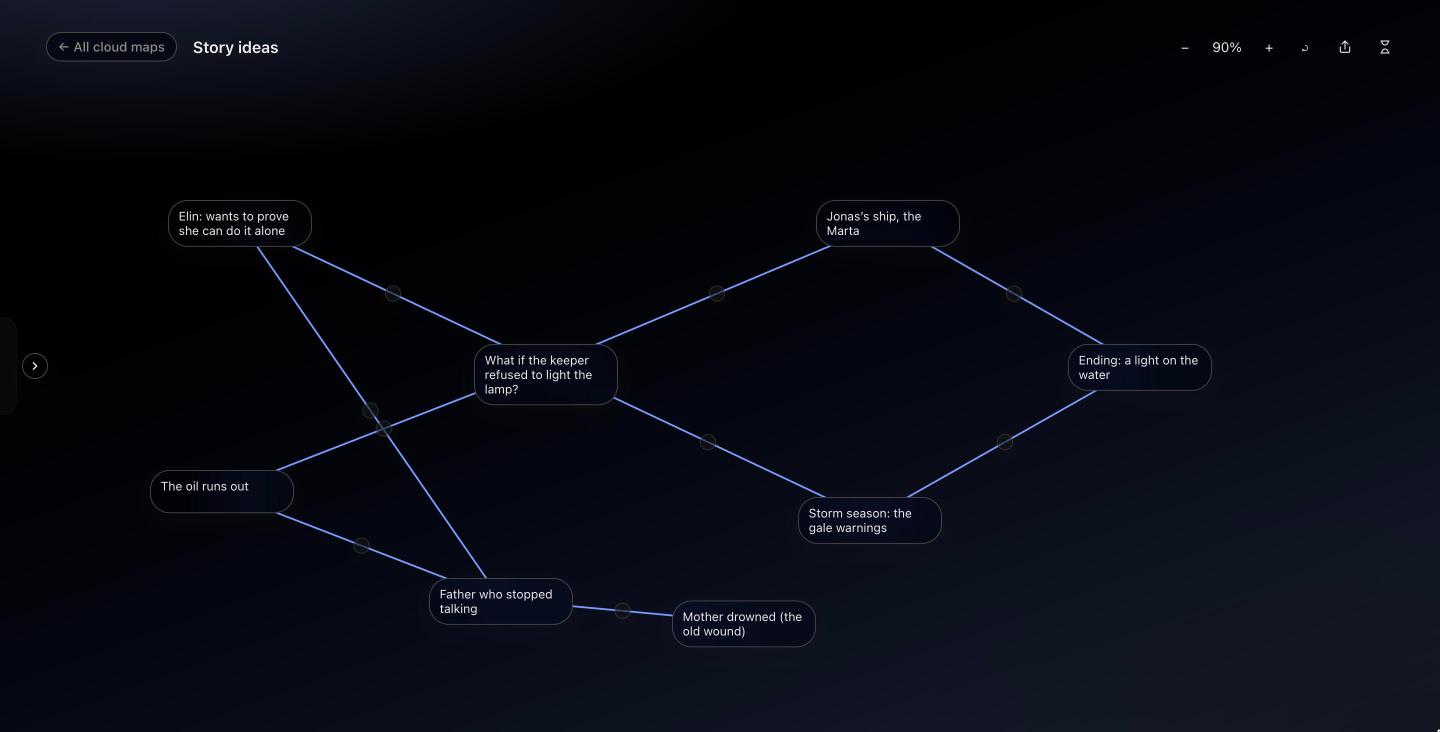
Each map keeps a version history, so you can try a big reorganisation and go back if the old shape was better.
Tip: set a timer for ten minutes and don’t link anything until it rings. Linking too early makes you edit instead of invent.